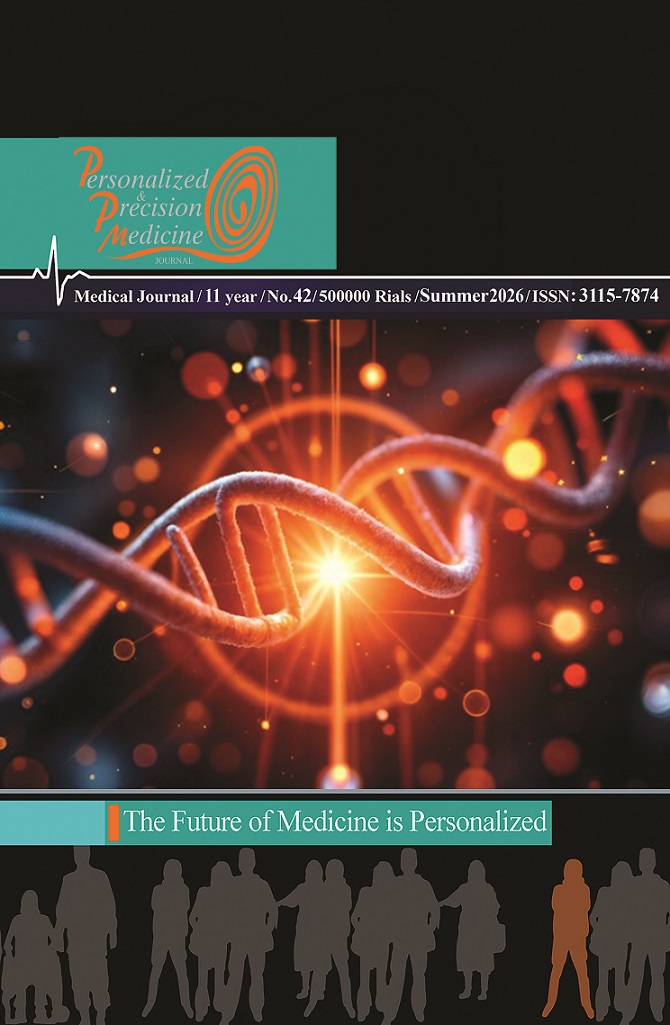
Where Innovations Meets Personalized and Precision Medicine
Volume & Issue: Volume 11, Issue 42, Original article, Summer 2026, Pages 1-70 
Number of Articles: 6

Cytotoxic and Apoptosis-Related Effects of Aqueous Trigonella foenum-graecum Seed Extract on SKOV-3 Human Ovarian Cancer Cells

Pages 1-10

https://doi.org/10.22034/ppmj.2026.743581

Mahdieh Ameri Shah Reza

Abstract Background: Ovarian cancer remains a major therapeutic challenge because of late diagnosis, recurrence, and treatment resistance. Fenugreek (Trigonella foenum-graecum L.) contains several bioactive constituents with potential anticancer properties. This study investigated the cytotoxic effect of aqueous fenugreek seed extract on SKOV-3 human ovarian cancer cells and evaluated its association with the expression of apoptosis-related genes.
Methods: SKOV-3 cells were treated with aqueous fenugreek seed extract at concentrations of 1, 10, 50, 100, and 200 µg/mL for 24 and 48 h. Cell viability was assessed using the MTT assay, and half-maximal inhibitory concentrations (IC50) were determined by nonlinear regression. To investigate apoptosis-related molecular changes, cells were treated with the experimentally determined IC50 concentration, and the relative mRNA expression levels of BAX, BCL2, and CASP3 were evaluated by quantitative real-time PCR (qRT-PCR) using GAPDH as the reference gene. Relative gene expression was calculated using the 2^−ΔΔCt method.
Results: Aqueous fenugreek extract reduced SKOV-3 cell viability in a concentration- and time-dependent manner. The estimated IC50 values were 38.5 µg/mL at 24 h and 19.7 µg/mL at 48 h, indicating greater cytotoxicity with prolonged exposure. Treatment at the IC50 concentration significantly increased BAX expression to 2.83-fold and CASP3 expression to 3.21-fold, while BCL2 expression decreased to 0.43-fold relative to untreated cells. Consequently, the BAX/BCL2 expression ratio increased approximately 6.6-fold, indicating a shift toward a pro-apoptotic molecular profile.
Conclusion: Aqueous T. foenum-graecum seed extract exerted concentration- and time-dependent cytotoxic effects on SKOV-3 ovarian cancer cells and was associated with coordinated modulation of apoptosis-related genes, characterized by increased BAX and CASP3 expression, decreased BCL2 expression, and an elevated BAX/BCL2 ratio. These findings suggest that modulation of apoptosis-related signaling may contribute to the cytotoxic activity of aqueous fenugreek extract. Further functional and protein-level studies are required to confirm apoptosis and clarify the underlying molecular mechanisms.

Regenerative Biotechnology of the Auditory System: Recent Advances in Cell Therapy, Tissue Engineering, Gene Therapy, and Genome Editing Toward Personalized Medicine

Pages 11-23

https://doi.org/10.22034/ppmj.2026.743582

Marzieh Alaei, Sogol Javaherian-nia, Roya Chabi

Abstract Sensorineural hearing loss ranks among the most common auditory disorders, arising mainly from injury to the cochlear sensory hair cells and their associated afferent neurons. Because the mammalian cochlea possesses only a minimal capacity for self-repair, achieving a definitive cure remains a persistent clinical obstacle. Recent advances in biotechnology, particularly in the fields of stem cell biology, tissue engineering, gene therapy, and genome editing, have opened new avenues for auditory system regeneration. This article surveys how hair cells differentiate at the molecular level, assesses the regenerative capabilities of different stem cell populations for repairing the inner ear, and reviews applications of newer tools such as RNA interference, CRISPR/Cas9-mediated editing, viral and non-viral gene-delivery systems, inner-ear organoid models, and bioengineered scaffolds. Preclinical studies indicate that integrating stem cell–based therapies with advanced biotechnological approaches can enhance the structural and functional regeneration of the inner ear. Despite these promising findings, further research is required to improve the efficacy, safety, and clinical translation of these technologies before they can be widely implemented in therapeutic practice.

Genetic profiles that Increase Susceptibility to Multiple Sclerosis after Epstein–Barr Virus Infection: Focus on HLA, EBV-Specific Immune Response, and Polygenic Immune Risk

Pages 24-43

https://doi.org/10.22034/ppmj.2026.743583

Kiana Ali-akbar-pourhemmati

Abstract The Epstein–Barr virus (EBV) is recognized as the primary infectious agent linked to multiple sclerosis (MS), although the presence of EBV infection alone does not suffice to explain the progression of the illness, given that most patients infected with EBV do not manifest MS. This review examines host genetic profiles that may increase MS susceptibility among EBV-exposed individuals, with emphasis on HLA-mediated antigen presentation, EBV-specific immune responses, and non-HLA immune pathways. The strongest genetic risk signal is HLA-DRB115:01, often within the HLA-DR15 haplotype, which may promote presentation of EBV-derived antigens such as EBNA1 and facilitate CD4+ T-cell activation, molecular mimicry, and CNS-directed autoimmunity. In contrast, HLA-A02:01 appears protective, potentially through more effective CD8+ T-cell-mediated control of EBV-infected B cells; therefore, absence of HLA-A02:01 may represent an important risk-modifying feature. Emerging evidence also implicates HLA-E01:01, particularly in individuals with a history of infectious mononucleosis, suggesting a role for altered NK-cell and CD8+ T-cell regulation in EBV-associated MS risk. Beyond HLA, non-HLA loci such as CD86, CD40, IL2RA, and IL7R may amplify EBV-driven immune activation by modulating antigen-presenting cell function, B/T-cell costimulation, cytokine signaling, and immune tolerance. High anti-EBNA1 antibody titers, especially in HLA-DRB115:01-positive individuals, may serve as an immunological marker of dysregulated host–EBV interaction. Overall, the most plausible high-risk profile combines EBV positivity, infectious mononucleosis or elevated anti-EBNA1 responses, HLA-DRB115:01 positivity, absence of HLA-A02:01, possible HLA-E01:01 carriage, and increased non-HLA immune risk burden. These profiles remain research-based risk-enrichment models rather than clinical prediction tools. Longitudinal investigations focusing on functional genomics, single-cell methodologies, HLA peptidomics, and EBV vaccination are required to understand the reasons behind the selective development of MS in certain EBV-infected individuals and to shape preventive strategies.

Nanoparticles in the Treatment of Anaemia: A Narrative Review

Pages 44-51

https://doi.org/10.22034/ppmj.2026.2097812.1076

Saeid Razavi Dizaji

Abstract Background: This review aims to critically evaluate the therapeutic potential of nanoparticle-based technologies for anaemia management and to discuss the biological mechanisms underlying their clinical and experimental efficacy.

Methods: A comprehensive narrative review was conducted using the PubMed, Scopus, and Web of Science databases to identify relevant publications published between 2010 and 2025. Searches incorporated standard medical keywords, including anaemia, nanoparticles, iron supplementation, targeted drug delivery, and haematological therapies. Eligible studies included preclinical investigations, animal experiments, and relevant review articles. Data were extracted systematically and synthesised through qualitative thematic analysis.

Results: The available evidence indicates that iron-based nanocarriers, iron oxide nanoparticles (including Fe₃O₄ nanoparticles), nanocapsules, and targeted nanoscale delivery systems substantially improve intestinal iron uptake, increase bioavailability, enable sustained drug release, and reduce gastrointestinal toxicity. These improvements are consistently associated with favourable changes in major haematological indices, including haemoglobin concentration (Hb), red blood cell (RBC) count, and serum ferritin levels. Furthermore, several advanced nanoplatforms possess antioxidant and anti-inflammatory properties that support erythropoiesis by attenuating oxidative stress, suppressing inflammatory mediators such as C-reactive protein (CRP), and protecting bone marrow function. Some multifunctional nanosystems have also demonstrated potential applications in gene therapy and diagnostic imaging. Nevertheless, not all nanoparticles exhibit favourable biological profiles. Certain materials, including titanium dioxide nanoparticles and specific iron oxide formulations, have been associated with oxidative stress, genotoxicity, and undesirable systemic toxicities.

Conclusion: Nanoparticle-based drug delivery systems represent a promising therapeutic strategy for anaemia by improving iron transport, enhancing bioavailability, and reducing treatment-related adverse effects. Despite these encouraging findings, concerns regarding cytotoxicity, oxidative damage, and the genotoxic potential of selected nanomaterials remain important challenges. Therefore, rigorous preclinical investigations together with well-designed clinical trials are essential to establish the long-term safety, efficacy, and clinical applicability of these emerging nanotherapeutic technologies.

Convergence with global trends in the knowledge structure and leading subfields of personalized medicine research in Iran

Pages 52-62

https://doi.org/10.22034/ppmj.2026.2107494.1079

Saleh Rahimi, Mohammad Reza Amiri, Faramarz Soheili

Abstract Background: Driven by artificial intelligence (AI) and genomics, personalized medicine (PM) is rapidly expanding. Mapping its conceptual structure through co-word analysis identifies research trends, thematic gaps, and priorities. This study mapped the conceptual structure and thematic evolution of PM in Iran from 2005 to 2025 using Web of Science (WoS) data.
Methods: Keyword co-occurrence and network analysis were performed on 623 WoS-indexed documents. Cluster analysis in VOSviewer and strategic diagrams in Excel identified thematic sub-domains and their relationships.
Results: Cluster analysis revealed nine distinct thematic clusters: (1) AI and machine learning in medical imaging and diagnosis; (2) gene editing, omics technologies, and the microbiome’s role in treatment; (3) personalized medicine and pharmacogenomics; (4) biomarkers and liquid biopsy in cancer diagnosis; (5) nanomedicine, biosensors, and targeted cancer therapy; (6) tissue engineering, regenerative medicine, and novel drug delivery systems; (7) early detection and management of chronic, inflammatory, and metabolic diseases; (8) nanoparticles, epigenetics, and integrative medicine approaches, including traditional medicine and digital health; and (9) cancer immunotherapy and tumor microenvironment analysis.
Conclusion: Personalized medicine in Iran has a dynamic, interdisciplinary, and evolving structure. Pharmacogenomics serves as the key infrastructure and driving engine, supporting the driving triangle of biomarkers and liquid biopsy, AI in medical imaging, and regenerative medicine with novel drug delivery. Cancer immunotherapy is a specialized, mature domain, while gene editing (CRISPR), nanomedicine, and the microbiome shape future frontiers. Clinical translation requires accelerating mature technologies, establishing national genomic databases, and strengthening interdisciplinary synergies to achieve precise, patient-centered, preventive treatments.

Integrating Culture and Susceptibility Testing with Inflammatory Biomarkers for Personalized Antibiotic Protocols

Pages 63-70

https://doi.org/10.22034/ppmj.2026.743608

Reyhaneh Mohammadi gandom abad

Abstract The escalating global crisis of antimicrobial resistance (AMR) necessitates a shift from empirical antibiotic therapy toward precision medicine integrating microbiological data with host inflammatory markers. This review evaluates personalized antibiotic protocols combining culture and susceptibility testing (CAST) with dynamic biomarkers, particularly procalcitonin (PCT) and C-reactive protein (CRP). Although CAST provides definitive susceptibility data, its turnaround time may delay treatment optimization. Biomarker-guided strategies offer real-time insights into host response and facilitate early de-escalation of broad-spectrum antibiotics.
We reviewed recent literature published between 2018 and 2026, focusing on high-impact studies. PCT-guided algorithms have reduced antibiotic duration by 2–5 days without increasing mortality or treatament failure across clinical settings, including community-acquired pneumonia and sepsis. Rapid molecular diagnostics and host-response transcriptomics further improve differentiation between colonization and active infection. Mathematical modeling and pharmacokinetic/pharmacodynamic (PK/PD) optimization enable individualized dosing, particularly in critically ill patients with altered drug clearance.
Clinical Decision Support Systems (CDSS) integrated with antibiotic stewardship programs enhance guideline adherence and reduce unnecessary antibiotic use. Despite challenges related to biomarker standardization, cost-effectiveness, and population validation, integrating artificial intelligence, genomics, and point-of-care diagnostics may enable continuous monitoring and proactive intervention. Ultimately, multimodal precision strategies can improve patient outcomes while reducing antimicrobial selective pressure and supporting sustainable AMR control.