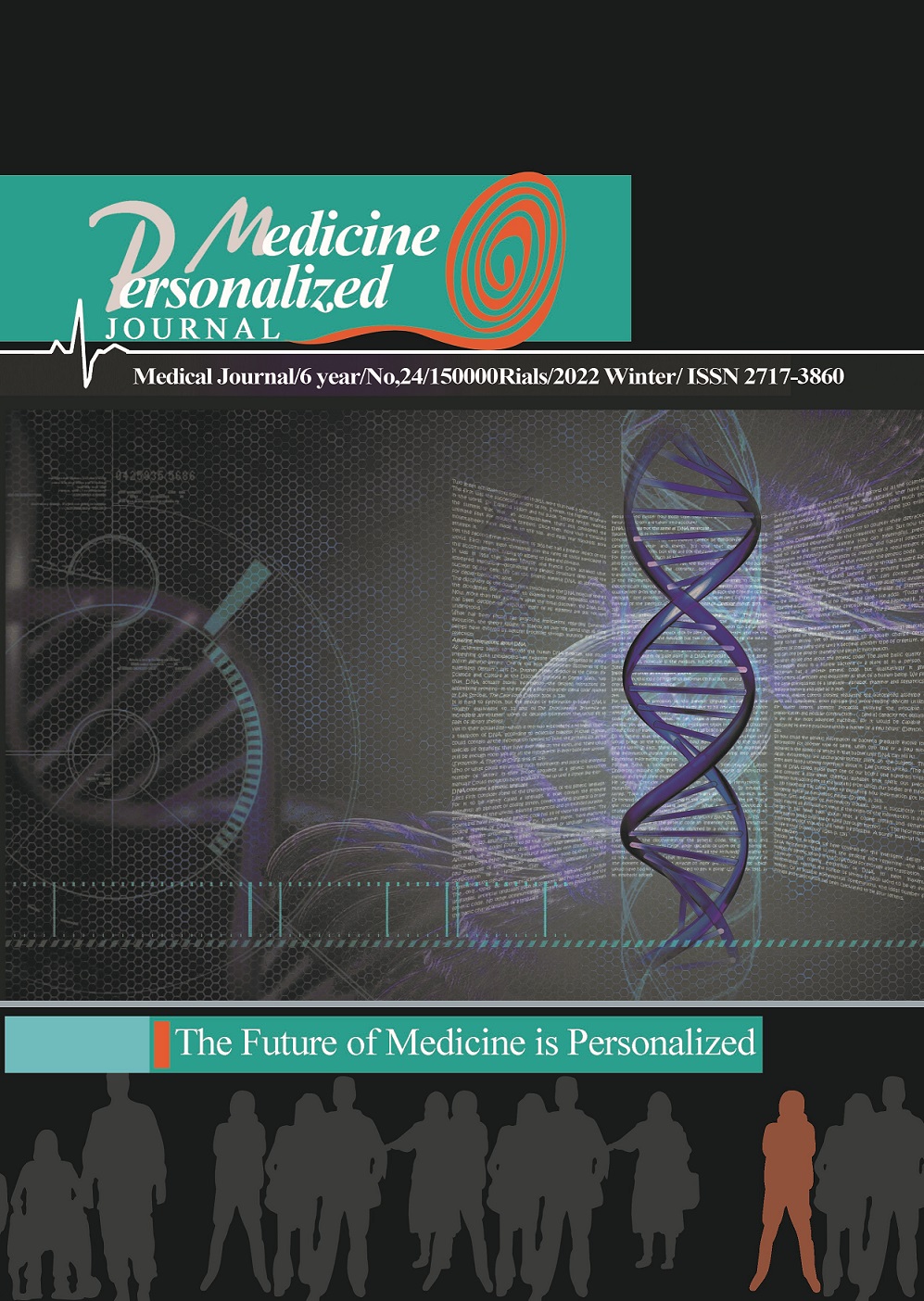
Where Innovations Meets Personalized and Precision Medicine
Volume & Issue: Volume 7, Issue 24, Original article, 2022, Pages 1-32 
Number of Articles: 6

The Role of DNA Methylation in Development and Progression of Rheumatoid Arthritis

Pages 1-7

https://doi.org/10.22034/pmj.2022.252438

Fawziah Mohammed, Seyed Akbar Moosavi

Abstract Rheumatoid arthritis (RA) is a chronic autoimmune disease of unknown etiology that results in progressive joint destruction and ultimately to disability. Currently effective biologic therapies, exist for approximately  40% of patients, but disease activity remains inadequately controlled in others. Therefore, it is crucial  to identify specific markers that predict therapeutic response in various patients, prior to the initiation of therapy.  DNA methylation , as a epigenetic factor, is increasingly being explored as a potential theranostic biomarker. It has been suggested that DNA methylation might contribute to RA development, nonetheless , with conflicting results. Epigenetic modules have provided a possible interface through which genetic and environmental risk factors  contribute to the susceptibility and pathogenesis of RA. Hence,  epigenetic regulators may provide promising drug targets to develop novel therapeutic drugs for tailored treatment of RA patients. Here we review the current knowledge regarding the role of DNA methylation in RA and indicate its potential therapeutic implications.

Epithelial-Mesenchymal Rransition and its Role in Breast Cancer Metastasis

Pages 8-13

https://doi.org/10.22034/pmj.2022.252439

Avan Saeed Mohammed, Ghazal Ghajari

Abstract Breast cancer is the most common cancer in women and distant site metastasis is the main cause of death in breast cancer patients. Epithelial-mesenchymal transition (EMT) is defined by the loss of epithelial characteristics and the acquisition of a mesenchymal phenotype. EMT is a vital process for large-scale cell movement during morphogenesis at the time of embryonic development. Tumor cells usurp this developmental program to execute the multi-step process of tumorigenesis and metastasis. Understanding the biological intricacies of the EMT may provide important insights that lead to the development of therapeutic targets in pre-invasive and invasive breast cancer, and could be used as biomarkers for identifying tumor subsets with greater chances of recurrence, metastasis, and therapeutic resistance leading to death. The purpose of this article is to investigate the association between EMT and breast cancer.

Androgens in Prostate Cancer: A Review Article

Pages 14-18

https://doi.org/10.22034/pmj.2022.252440

Nazar Shabila, Ghasem Ghorbani Vale Zaghard

Abstract Prostate cancer represents a major health problem in men worldwide. Androgens are required for the growth and maintenance of the prostate. The androgen-signaling axis plays a pivotal role in the pathogenesis of prostate cancer. Clinical treatments that target steroidogenesis and the androgen receptor (AR) successfully postpone disease progression. The role of androgens and AR signaling has been well characterized in metastatic prostate cancer, where it has been shown that prostate cancer cells are exquisitely adept at maintaining functional AR signaling to drive cancer growth. This review summarizes the current information regarding the role of androgens in prostate cancer.

miR-22-3p as a Novel Biomarker in Rheumatoid Arthritis

Pages 19-22

https://doi.org/10.22034/pmj.2022.252479

Maryam Hassanpoor, Bahareh Abbasi

Abstract Rheumatoid arthritis (RA) is a chronic inflammatory autoimmune. Early diagnosis of RA remains challenging. A significant portion of RA patients also experience unremitting symptoms despite treatment. miRNA are involved in the regulation of autoimmunity- and inflammation-related processes. In this study, we evaluated the expression of miR-22-3p in serum of RA patients as a novel biomarker. Expression level of this gene in the blood serum of 30 people with RA compared with 30 healthy individuals by the qRT-PCR method. Results showed levels of miR22-3p were significantly higher in the serum of patients with RA in comparison with healthy control (p<0.0001). We suggest that miR 22-3p can be used as a biomarker in early detection and screening.

Investigating the Link Between MS and the EBV Virus

Pages 23-27

https://doi.org/10.22034/pmj.2022.252441

Bahareh Abbasi, Almas Araghi, AmirHossein Akbari Aghababa

Abstract Multiple sclerosis (MS) is a disease of the central nervous system characterized by inflammation, demyelination, and neuronal damage. Epstein–Barr virus (EBV) is a human DNA herpesvirus infecting more than 90% of the world's population. EBV is the etiological agent of infectious mononucleosis (Pfeiffer's disease). Major predisposing factors for MS are certain tissue types (e.g., HLA DRB1*15:01), vitamin D deficiency, smoking, obesity, and infection with Epstein-Barr virus (EBV). This review summarizes current knowledge on the association between EBV and MS.

A Review of the Role of Exosomes in Prostate Cancer

Pages 28-32

https://doi.org/10.22034/pmj.2022.252442

Rafid A Abdulkareem, Seyed Majid Hashemi Fard, Masoomeh Kohandani

Abstract Prostate cancer (PCa) is the most common solid tumor in men. While patients with local PCa have better prognostic survival, patients with metastatic PCa have relatively high mortality rates. Exosomes (and other extracellular vesicles) are now part of the cancer research landscape, involved both as players in pathophysiological mechanisms, as biomarkers of the cancer process, and as therapeutic tools. Exosomes contain miRNAs, mRNAs, and proteins with the potential to regulate signaling pathways in recipient cells. Accumulating evidence indicates that exosomes play important roles in cell communication and tumor progression and are suitable for monitoring PCa progression and metastasis.